
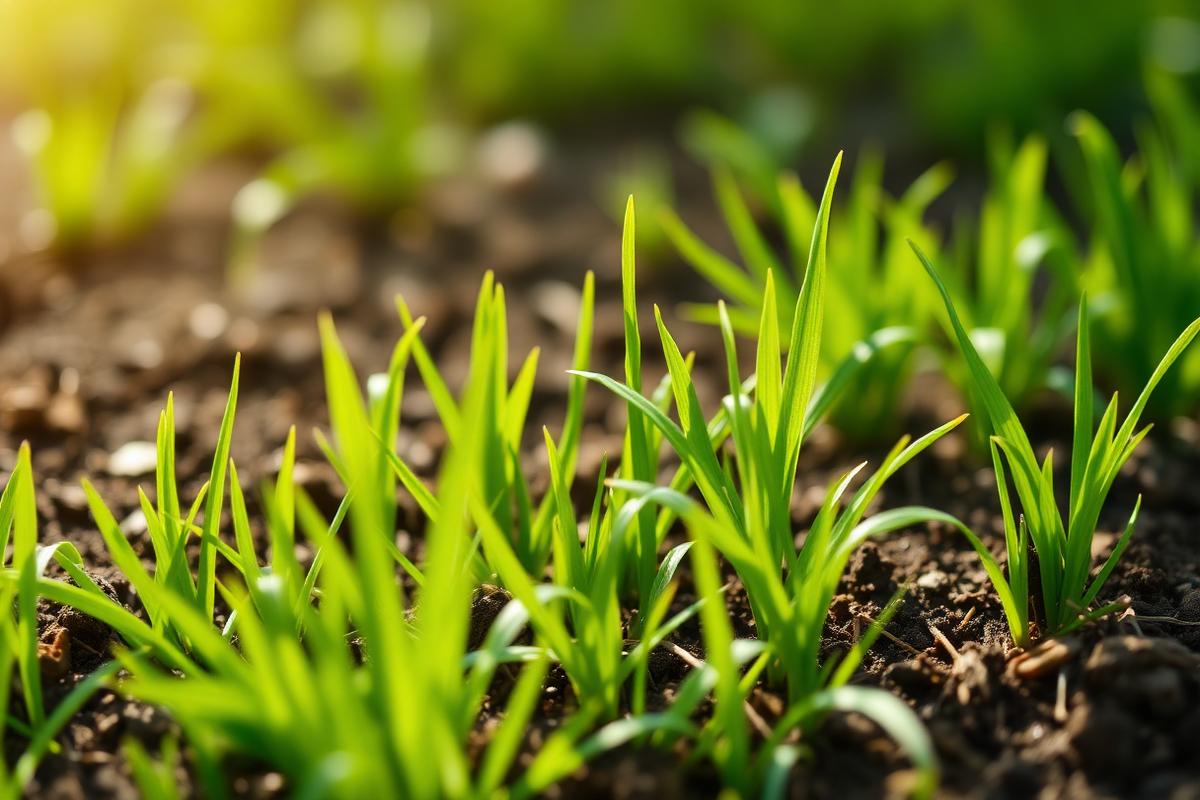
Best timing: Spring and fall are both good windows for overseeding in Michigan, with late August through late September the highest-success stretch.
What overseeding fixes
If your lawn looks tired rather than dead, overseeding is usually the right call. It's also the cheapest form of weed control you can buy — thick turf leaves nowhere for crabgrass and broadleaf weeds to start.
- Thin, see-through turf where soil shows between plants
- Summer heat and drought damage
- Grub, disease or salt damage along drives and walks
- High-traffic paths, pet areas and play zones
- Older lawns still growing decades-old seed varieties
Seed selection for Michigan lawns
We use cool-season blends built for our climate: Kentucky bluegrass for spreading repair, turf-type tall fescue for drought and traffic tolerance, and perennial ryegrass for fast establishment. The ratio changes based on sun, shade, irrigation and how the lawn gets used.
Modern varieties are meaningfully better than what most lawns were originally seeded with — finer texture, deeper color and improved disease resistance.
Aerate first, then overseed
Seed lying on top of compacted thatch rarely takes. Aerating immediately before overseeding drops seed into open holes with real soil contact, sheltered from sun and birds. It's the single biggest factor in how much of your seed actually becomes grass — which is why aeration and overseeding are the one pairing we always recommend together.
We also offer a starter fertilizer add-on with aeration and overseeding: a phosphorus-forward feed that pushes root development while the new seedlings establish.
Aftercare
Keep the top inch of soil consistently moist for two to three weeks, mow high once new grass reaches about three inches, and skip pre-emergent weed control that season — it stops your new seed from germinating just as effectively as it stops crabgrass.