
Best timing: Spring (May–June) and late summer into early fall (mid-August–September) give the most reliable germination in our area.
How hydroseeding works
Everything is mixed in the tank and applied in one pass: seed, mulch that acts as a moisture blanket, a tackifier that glues the layer to the soil so it doesn't wash off a slope, a moisture manager additive that holds water between waterings, and a high-phosphorus starter fertilizer sized for young seedlings.
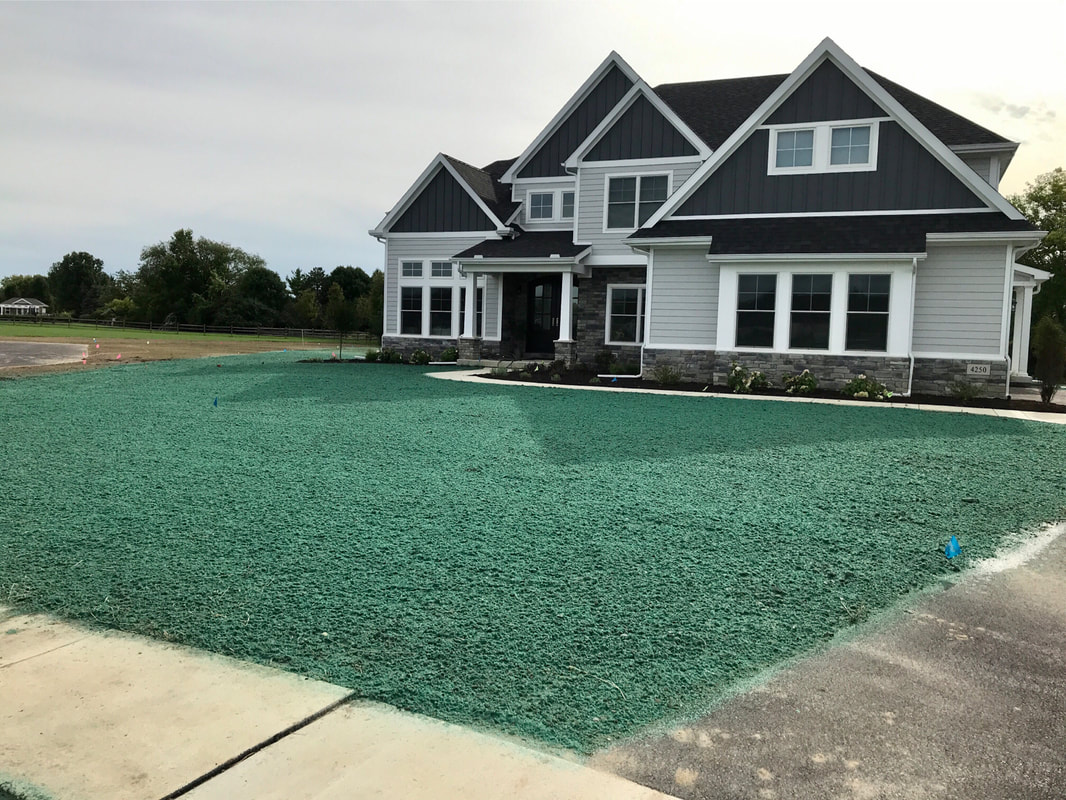
Because the seed is suspended in that mix, coverage is uniform — no thin strips or heavy clumps — and the green mulch makes it obvious exactly where we've been.
Hydroseed vs. sod vs. dry seed
Sod gives instant green but is expensive and locks you into whatever variety was grown at the farm, often on a different soil type than your yard. Dry seed is cheap but exposed to wind, birds and washouts, and germinates unevenly.
Hydroseeding sits in between: a full-yard lawn using seed varieties selected for Michigan conditions, with a mulch layer protecting it from day one, and roots that grow up in your own soil.
- Seed selection: choose blends suited to sun, shade or high traffic
- Erosion control: the tackified layer holds seed on slopes and swales
- Even germination: mulch and moisture manager keep moisture consistent across the yard
- Strong start: high-phosphorus starter fertilizer feeds root development from day one
- Deep rooting: the lawn establishes in your native soil, not farm soil
What germination looks like
In warm soil you'll usually see the first blades in 7–14 days, a filled-in look in about 4–6 weeks, and a mature, mowable lawn over the following season. Cool spring or late fall soil temperatures push the timeline out — that's normal.
Watering and aftercare
Water is the whole ballgame. Keep the surface damp — short, frequent cycles several times a day for the first two to three weeks, then longer and less often as roots go down. The moisture manager additive helps bridge the gap between waterings, but it does not replace consistent watering.
We walk every customer through a watering schedule tailored to their irrigation setup before we leave the site.