
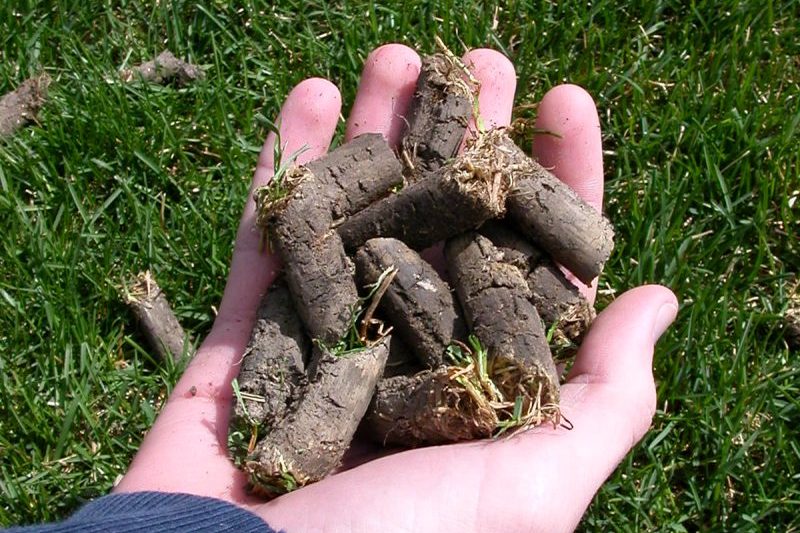
Best timing: Spring and fall are both good windows for aeration in Michigan — early September through mid-October is prime, with late April through May the strong spring option.
Signs your lawn needs aeration
Compaction builds slowly, so the symptoms often get blamed on watering or fertilizer. If any of these sound familiar, aeration is usually the fix that makes everything else work better.
- Water puddles or runs off instead of soaking in
- The soil is hard enough that a screwdriver won't push in easily
- Thin, slow-growing turf despite regular fertilizing
- A spongy thatch layer more than half an inch thick
- Heavy foot traffic, kids, dogs, or recent construction on the property
Core aeration vs. liquid and spike aeration
We use core (plug) aeration, which physically removes soil and creates open channels that stay open. Spike aeration just pokes holes and pushes soil sideways, which can make compaction worse in Michigan soils. Liquid products can help soil structure over time, but they don't create the immediate physical openings that seed and soil need.
The cores we pull are left on the surface on purpose. They break down within a couple of weeks and return soil biology and organic matter to the lawn.
What to expect on service day
We ask that you mark irrigation heads, invisible fence lines and any shallow utilities before we arrive, and water the lawn a day ahead if it hasn't rained — moist soil lets the tines pull deeper cores.
Most residential lawns are finished in a single visit. We make multiple passes in high-traffic areas so hole density is where it needs to be, then clean hard surfaces before we leave.
Aeration pairs best with overseeding
Open holes are ideal seed beds. Aerating and overseeding in the same visit puts new seed in direct contact with soil, protected from wind, sun and birds — dramatically better results than either service alone.
You can also add starter fertilizer to an aeration and overseeding visit to feed root development right when the new seed needs it.